President Trump claim's to be "in charge" of Venezuelan government after capturing the country's president
Trump faces international backlash for foreign intervention and "illegal abduction."
by Alaina Coats
January 6, 2026
When asked by reporters who was overseeing the Venezuelan government after the U.S. capture of the country's president, Nicolas Maduro, President Donald Trump responded, "we are."
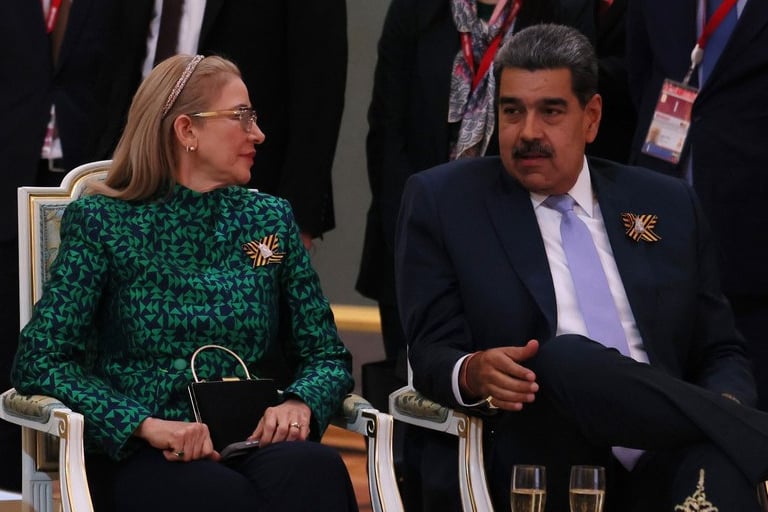
On January 3, 2026, Maduro and his wife Cilia Flores were captured and brought to the United States to face federal charges related to narcotics and weapons offenses. The United States accused the two of "corrupting institutions to import tons of cocaine into the United States."
U.S. Federal court records show Maduro is accused of "narco-terrorism, cocaine importation conspiracy, possession of machine guns and destructive devices, and conspiracy to possess machine guns and destructive devices." Flores, is accused of "accepting bribes and ordering kidnappings, beatings, and murders against those who owed drug money."
Both Maduro and is wife pleaded not guilty in Manhattan federal court on January 5, with Maduro telling the court that he was "kidnapped as a prisoner of war" and asserting that he is still the president of Venezuela.
Under Venezuelan constitutional procedures, Vice President Delcy Rodriguez was sworn in as interim president following Maduro's removal from the country. She and other Venezuelan officials have condemned U.S actions and insist Madura is still their leader.
In referencing Article 2(4) of the United Nations (UN) Charter, "All Members shall refrain in their international relations from the threat or use of force against the territorial integrity or political independence of any state." International law experts argue that Article 2(4) prohibits a nation from invading or attacking another without a justifiable cause citing that it violates the charter's core principles.
Legal scholars have condemned the Trump administration contending that they are undermining the law and what it was designed to protect. Some are accusing the president of asserting control over Venezuela in an attempt to control its oil industry.
According to the U.S. Energy Information Administration, Venezuela owns approximately 20% of the world's oil reserves-- with the potential of producing 303 billion barrels. Currently the United States ranks number one in the world for oil production, producing approximately 20 million barrels per day.
President Trump's capture of Venezuelan President Maduro has led many to question U.S. foreign policy in international affairs and Western sovereignty.